Tiny Child with Christmas Tree 3D Pop Up: A Practical Guide to Paper Art Design
The intersection of traditional paper crafting and modern digital design has given rise to intricate projects that blend nostalgia with precision. Among these, the Tiny Child with Christmas Tree 3D Pop Up stands out as a compelling example of layered papercraft. This design is not merely a flat illustration; it is a structural engineering feat in miniature form. When folded, it appears as a simple card or sheet, but upon unfolding, it reveals a multi-dimensional scene featuring a child and a festive tree. Understanding the mechanics, applications, and comparative advantages of this specific design helps crafters determine if it fits their specific project goals.
Understanding the Mechanics of Layered Pop-Up Designs
The Tiny Child with Christmas Tree 3D Pop Up Folded relies on a specific geometric principle where layers are attached to a base via precise creases and tabs. Unlike standard greeting cards that might use simple V-folds, this design utilizes complex layering to create depth. The "folded" state is compact, making it ideal for storage or shipping, while the expanded state offers a visual surprise.
What distinguishes this particular design is its thematic focus and structural complexity. The subject matter—a tiny child beside a Christmas tree—requires careful attention to scale. If the proportions are off, the 3D effect can look distorted. The design provided typically includes vector files (SVG) and Adobe Illustrator (AI) formats, ensuring that the geometry remains sharp regardless of the size at which it is cut. This scalability is a significant advantage over raster-based images, which often lose quality when resized.
Digital Versus Manual Cutting: Evaluating Your Tools
One of the primary decision factors for potential buyers is the method of production. The inclusion of SVG files means the Tiny Child with Christmas Tree 3D Pop Up is optimized for electronic cutting machines like Silhouette or Cricut. For hobbyists who own these devices, the workflow is streamlined: load the file, select the material, and let the machine handle the intricate cuts and score lines. This approach ensures consistency, especially when producing multiple units.
However, reliance on machinery is not a strict requirement. The design files are also compatible with manual execution using art knives and scissors. While this method demands more time and a steady hand, it offers greater flexibility for those without access to expensive equipment. The tradeoff here is clear: machine cutting offers speed and uniformity, whereas manual cutting allows for immediate adjustments and requires no specialized hardware investment. For a one-off gift, manual cutting may be perfectly adequate. For batch production, such as creating ornaments for a family gathering, the efficiency of a cutting machine becomes a decisive factor.
Comparing Formats and Material Choices
When evaluating the Tiny Child with Christmas Tree 3D Pop Up Folded, it is essential to consider how it compares to other popular holiday crafts. Traditional die-cut kits often come pre-scored and pre-colored, offering convenience but limited customization. In contrast, the downloadable format of this design allows users to choose their own paper stock. This choice directly impacts the final aesthetic and durability.
- Cardstock Weight: Heavier cardstock provides better structural integrity for the pop-up mechanism but requires sharper blades and more pressure during cutting. Lighter paper folds more easily but may lack the rigidity needed to hold the 3D shape over time.
- Color Variance: It is important to note that preview images are for reference only. The final product's color depends entirely on the physical paper selected and the lighting conditions under which it is viewed. This variability is a double-edged sword; it allows for personalization but requires the crafter to source materials that match their vision.
- Assembly Requirements: Unlike some self-adhesive designs, this project necessitates glue or double-sided tape. This adds a step to the process but ensures a stronger bond than adhesive-backed papers, which can sometimes peel at the stress points of a pop-up mechanism.
Use Cases: From Ornaments to Decorative Lighting
The versatility of the Tiny Child with Christmas Tree 3D Pop Up extends beyond a simple greeting card. Its compact nature when folded makes it an excellent candidate for conversion into a hanging ornament. By adding a small loop of ribbon or wire to the top edge, the piece transforms into a durable decoration suitable for a Christmas tree.
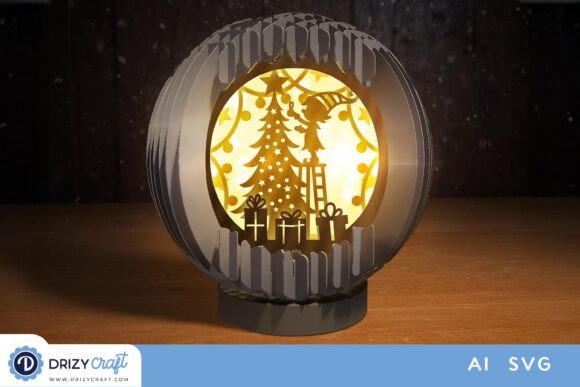
Furthermore, the layered structure creates natural pockets for light. A practical enhancement involves integrating small LED lights within the folded sections. When illuminated from behind or within, the translucent layers of the paper create a glowing, ethereal effect that flat decorations cannot achieve. This application shifts the item from a static craft to an interactive light fixture, adding value to the project.
For those looking to create unique mini-decor, the design can be mounted on a stand or placed inside a shadow box. The 3D effect is most pronounced when viewed from the front, making it ideal for display cases or mantelpieces where the angle of view is controlled. Compared to mass-produced plastic ornaments, this paper alternative offers a handmade charm that appeals to recipients valuing artisanal gifts.
Decision Factors: Is This the Right Project for You?
Choosing to undertake the Tiny Child with Christmas Tree 3D Pop Up Folded project depends on several variables. If your goal is a quick, low-effort decoration, pre-made store-bought items may be more appropriate. However, if you seek a personalized gift that demonstrates effort and creativity, this design is a strong contender.
Consider your skill level. While the instructions are generally straightforward, the assembly phase requires patience. Aligning the layers correctly and applying glue without warping the paper takes practice. Beginners might find the learning curve steep, but the result is often rewarding enough to justify the initial difficulty. Conversely, experienced crafters will appreciate the clean vector lines and the ability to resize the design while maintaining aspect ratios.
Another critical factor is the intended recipient. As a gift for friends, family, or someone special, the handmade nature of this item carries emotional weight. It signals that time was invested specifically for them. However, if the recipient prefers highly polished, commercial-grade products, the slight imperfections inherent in handmade paper art might not align with their expectations. Managing these expectations is part of the evaluation process.
Limitations and Realistic Expectations
No craft project is without limitations. The Tiny Child with Christmas Tree 3D Pop Up is delicate by nature. Paper is susceptible to moisture, tearing, and wear over time. Unlike metal or glass ornaments, it should not be exposed to outdoor elements or handled excessively. This fragility limits its longevity as a permanent heirloom unless carefully preserved.
Additionally, the resizing capability, while useful, has constraints. While SVG files allow for scaling, the design must maintain its aspect ratio to function correctly. Stretching the image horizontally or vertically will ruin the folding geometry, causing the pop-up mechanism to fail. Users must adhere to proportional scaling to ensure the structural integrity of the final piece.
Final Considerations for Crafters
In summary, the Tiny Child with Christmas Tree 3D Pop Up Folded represents a balanced option between digital convenience and traditional craftsmanship. It offers the precision of vector files for machine cutting while remaining accessible to those who prefer manual tools. Its distinctiveness lies in its layered 3D effect and the warm, nostalgic imagery of a child and a Christmas tree.
When compared to alternatives, it excels in customizability and the potential for creative enhancements like LED integration. However, it requires a willingness to engage with the assembly process and an understanding of the material limitations. For adults aged 20 to 50 looking to create meaningful, unique holiday decor or gifts, this design provides a robust framework. By weighing the benefits of personalization against the time and skill required, crafters can make an informed decision on whether this project aligns with their holiday goals.