Teacher Card 3D SVG: A Creative Digital Asset for Crafters
In the realm of digital crafting and personalized gift-giving, the Teacher Card 3D SVG has emerged as a versatile tool for creators looking to add depth and dimension to their projects. Unlike traditional flat vector files, this specific format is designed to simulate three-dimensional effects when layered, cut, and assembled. Whether you are a seasoned professional running a small business or a parent preparing a heartfelt thank-you note for your child's educator, understanding the capabilities and limitations of this file type can significantly enhance your creative output.
The Evolution of Dimensional Greeting Cards
The journey from flat paper cards to intricate pop-up designs has been accelerated by modern cutting technology. The Teacher Card 3D SVG represents a bridge between digital design and physical artistry. Historically, creating a card with a raised element required complex folding techniques, glue application, and precise manual cutting. Today, these processes are streamlined through software compatibility and pre-designed layers.
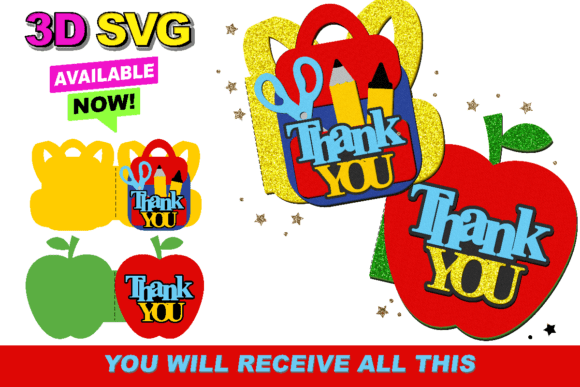
This digital asset allows users to bypass the tedious sketching phase. Instead of drafting every angle and shadow by hand, the file provides a blueprint that translates directly into cut lines. The result is a card that appears to have volume, often featuring elements like apples, books, or chalkboards that seem to float above the base layer. This visual appeal makes it an ideal choice for occasions where a standard store-bought card feels insufficient.
Understanding the File Structure and Compatibility
At its core, the Teacher Card 3D SVG is a collection of vector paths organized into distinct layers. When you download the product, you typically receive a neat, zipped folder containing the primary SVG file, along with potential variations in color or size. The "3D" aspect is achieved not through actual three-dimensional modeling within the file itself, but through the strategic arrangement of multiple cut layers that, when stacked with foam tape or adhesive pads, create a physical illusion of depth.
Software Integration: The beauty of this format lies in its accessibility. It is effortlessly trimmable on industry-standard platforms such as Silhouette Studio and Cricut Design Space. These programs interpret the SVG data to generate the necessary cut lines for your machine. However, if your creativity flows through a different type of machine, kindly ascertain its compatibility with this distinct file format. While most modern vinyl cutters support SVGs, some older models or specialized laser engravers may require conversion to DXF or PNG formats.
- Silhouette Studio: Users can import the file directly, utilizing the "Weld" or "Attach" functions to ensure layers remain aligned during the cutting process.
- Cricut Design Space: The platform recognizes the layers automatically, allowing for easy color changes and material selection before sending the job to the cutter.
- Other Machines: For those using Brother ScanNCut or Glowforge, a quick check of the manufacturer's supported file types is essential to avoid rendering errors.
Practical Applications and Real-World Scenarios
The utility of the Teacher Card 3D SVG extends far beyond a simple end-of-year gift. Its modular nature allows for customization that resonates with specific personalities and teaching styles. Consider the scenario of a PTA organizer tasked with creating fifty unique cards for staff members. Using a flat template would result in a monotonous batch, but leveraging the layered capability of this SVG allows for mixing and matching colors, fonts, and dimensional elements.
Scenario One: The Personalized Classroom Gift
Imagine a student who wants to make a card that reflects their teacher's favorite subject. By downloading the Teacher Card 3D SVG, they can isolate the main motif—perhaps a science beaker or a musical note—and change the color scheme to match the classroom decor. The 3D effect adds a tactile quality that students appreciate, making the gesture feel more significant than a printed image.
Scenario Two: Small Business Product Lines
For craft entrepreneurs, time is currency. The Teacher Card 3D SVG offers a way to rapidly prototype new products. A business owner can test market reactions to different designs without investing hours in manual drafting. Once the design is finalized, the production process becomes a matter of loading cardstock, setting the blade depth, and initiating the cut. The consistent precision of the machine ensures that every card sold meets a high standard of quality.
- Efficiency: Reduce design time from hours to minutes.
- Consistency: Ensure every unit produced looks identical.
- Scalability: Easily adjust quantities based on demand without reworking the design.
Evaluating Suitability and Limitations
While the Teacher Card 3D SVG offers numerous advantages, it is important to approach it with realistic expectations. Not every project requires a three-dimensional element, and the added complexity of layering does introduce certain constraints.
Material Considerations
To achieve the best results, the choice of material is paramount. Thin printer paper will not hold up well under the stress of multiple layers and adhesive foam. Instead, opt for cardstock ranging from 65 lb to 110 lb weight. This thickness provides the rigidity needed to support the floating elements while remaining easy for the cutting blade to penetrate cleanly. If you attempt to use materials that are too thick, you may risk dulling your blade or causing registration issues where the layers do not align perfectly.
Design Complexity vs. Machine Capability
Another consideration is the intricacy of the design. Some Teacher Card 3D SVG files feature very fine details or tiny text. While these look stunning on a screen, they can be challenging for home cutting machines to execute flawlessly. Small pieces may detach during weeding (the removal of excess material) or fail to cut completely if the blade pressure is not adjusted correctly. It is advisable to review the preview in your software before committing to a full cut. If a design seems overly complex for your current setup, consider simplifying it or choosing a version with bolder lines.
Assembly Time
The "3D" aspect necessitates assembly. Unlike a flat card that can be cut and folded immediately, a dimensional card requires gluing or taping layers together. For a single card, this adds only a few minutes to the process. However, for bulk orders, this step can become time-consuming. Creators should factor in this assembly time when planning their workflow or pricing their services.
Maximizing Value Through Customization
The true power of the Teacher Card 3D SVG lies in its adaptability. It serves as a foundation upon which you can build something entirely unique. You are not limited to the default colors provided in the preview. Within your design software, you can swap out pastel hues for vibrant neons, or even incorporate metallic finishes by printing on specialty paper before cutting.
Furthermore, you can combine this file with other assets. Perhaps you want to add a handwritten message inside, or attach a small charm to the front. The layered structure of the SVG makes it easy to integrate additional elements without disrupting the overall balance of the design. This flexibility encourages experimentation, allowing both novices and experts to push the boundaries of what a greeting card can be.
Tips for Success
To ensure your project turns out beautifully, keep these practical tips in mind:
- Test Cut First: Always run a test on scrap paper to verify blade settings and alignment.
- Use Foam Tape: Double-sided foam adhesive strips are essential for creating the lift that defines the 3D effect.
- Check Layer Order: In your software, ensure the background layer is at the bottom and the decorative elements are stacked correctly.
- Verify File Format: Before purchasing or downloading, confirm that the zip file contains an SVG compatible with your specific software version.
Conclusion
The Teacher Card 3D SVG is more than just a digital file; it is a gateway to expressing gratitude in a tangible, memorable way. By leveraging the precision of modern cutting machines and the versatility of vector graphics, creators can produce high-quality, dimensional cards that stand out in a sea of generic options. Whether you are crafting for personal joy or commercial gain, understanding the nuances of this format—from software compatibility to material selection—will empower you to create with confidence.
As you explore the possibilities offered by this resource, remember that the best results come from balancing technical skill with creative vision. With the right tools and a clear understanding of the file's capabilities, the Teacher Card 3D SVG can transform a simple gesture into a lasting keepsake that teachers will cherish long after the school year ends.